Knowing Christ Matters

by admin on May 12, 2013

Acts 16:9-15
9During the night Paul had a vision: there stood a man of Macedonia pleading with him and saying, “Come over to Macedonia and help us.”10When he had seen the vision, we immediately tried to cross over to Macedonia, being convinced that God had called us to proclaim the good news to them.11We set sail from Troas and took a straight course to Samothrace, the following day to Neapolis,12and from there to Philippi, which is a leading city of the district of Macedonia and a Roman colony. We remained in this city for some days.13On the sabbath day we went outside the gate by the river, where we supposed there was a place of prayer; and we sat down and spoke to the women who had gathered there.14A certain woman named Lydia, a worshiper of God, was listening to us; she was from the city of Thyatira and a dealer in purple cloth. The Lord opened her heart to listen eagerly to what was said by Paul.15When she and her household were baptized, she urged us, saying, “If you have judged me to be faithful to the Lord, come and stay at my home.” And she prevailed upon us.

Henry Ford had a very important relationship with a man by the name of Charlie Steinmetz. Steinmetz was a very different man. To begin with, he was a dwarf and he was deformed. But there was something else about Steinmetz that was very important to Henry Ford. Steinmetz was truly a genius in the area of electrical engineering. It was Steinmetz who had built the first generators in the Ford plant in Dearborn, Michigan.
One afternoon those generators stopped running. The regular mechanics worked at solving the problem but simply failed. Every hour that the plant was not operating meant a financial loss for the Ford Motor Company. They decided that the only one who could solve their problem was Steinmetz. He was brought in to fix the generators.
This brilliant man worked for a short time and the generators were working again. Several days later Henry Ford got a bill for the work that was done. The bill was for $10,000, a lot of money in those days and especially for less than a day of work. Even though Ford was a very wealthy man he wrote Steinmetz a letter. He wrote, “Charlie, isn’t this bill just a little high for a few hours of tinkering around on those motors?”
The bill came back with some modification which seemed to explain everything. Now it read, “For tinkering around on the motors: $ 10.00. For knowing where to tinker: $ 9,990.00. Total: $ 10,000.” Henry Ford got the point and paid the bill. Tinkering around on the motors did not matter but knowing where to tinker seriously mattered.


Last Sunday, we talked about loving and serving one another, two ways to be a disciple of Christ. Jesus showed us how to love and serve one another by washing his disciples’ feet. The world will know that we are Jesus’ disciples when we love and serve one another.

Today, we encounter a disciple of Christ who has been known as Jesus’ disciple in human history. His name is Paul. For the last four weeks, we had Bible study. We learned of Paul’s life and theology. Looking at his life, we agreed that Paul was very passionate at spreading the Good news after he came to experience Jesus in Damascus. In fact, I can say that Paul knew his works valued only $ 10 but his knowledge about Jesus valued $ 9,990. Knowing Christ seriously matters. That is why he went out to spread to the world what he knew.

Let’s see today’s text. We come to one of the greatest events in history, the carrying of the Gospel into Europe. That Gospel would saturate the continent and later many followers of Christ would sail out to live in the new land called America, taking the Gospel with them and causing America to become a Christian nation. Furthermore, about three hundred years ago, American missionaries came to Korea with the Gospel. The Gospel has been spread throughout the world.
How did God get Paul to understand that God wanted him to go to Europe? In a dream, God sent him a vision. Paul saw a hungry-hearted man standing on the European shore of Macedonia, with arms outstretched, saying, “Come over into Macedonia and help us.”

When Paul awoke, he thought, “This is it. God wants me to go into Macedonia. Let’s go!” Here is a wonderful thing about Paul. When he understood God’s will, he was ready to follow it immediately.
Macedonia was in Greece, and Greece was in Europe. Greece was rich with beauty, philosophy, art, culture, and gaiety. However, even though Macedonia was rich with those things, they needed help. The man of Macedonia in Paul’s vision represented a great need in that place.

Paul and his traveling companions went to Macedonia and stopped at Philippi, the chief city in Macedonia. They were in Europe now and they were launching a movement which would shake the world. In Philippi, Paul’s party went out by the riverside where a group of good women were holding a prayer meeting. In his vision, Paul saw a man, but at his first meeting in Europe there were only women present. It is worth noting that it was women that were the first Europeans to be evangelized by Paul. The leader of the prayer meeting was Lydia. We can know she was a successful business woman by the phrase “a dealer of purple cloth.” At that time, purple dye was one of the most expensive stuffs. This woman knew God and when Paul and his friends came to the meeting, she was ready to listen.

Lydia listened and came to have faith in Christ. Her faith became immediately active. She was baptized along with her whole household, and she opened her home to Paul and the others. Social and cultural barriers crumbled, and this corner of the empire was beginning to be changed by God’s grace. I can say that Lydia became a person who valued knowing Christ. It is important to note the fact that Paul’s journey was entirely guided by the Holy Spirit. Three times, they wanted to go Asia Minor. However, the Holy Spirit forbids them to go there. And while they were at Troas, on the northwest corner of Asia Minor, the Holy Spirit gave Paul the vision of the man of Macedonia.

In today’s Gospel lesson, we can see Jesus’ promise to his disciples that he will never leave them desolate, that he will come to them in the Spirit, and teach them, and defend them. It is through the work of the Holy Spirit that Jesus will continue his work on earth. It is the Holy Spirit that guides Paul on his journeys, that brings conversions, and that opens the heart of Lydia to receive Paul’s words and to be baptized in Philippi. Christian disciples are never alone. They are accompanied, led, and strengthened by Christ’s continuing work through the Holy Spirit.

Also, the Holy Spit will remind us of what Jesus said to us. It is the peace of Christ, one of the most precious gifts from the Holy Spirit. Jesus said, “Peace I leave with you, my peace I give to you not as the world gives. Do not let your hearts be troubled, and do not be afraid.”

Paul believed that his role as Jesus’ disciple was to spread to the world the peace that Jesus promised. Through the Bible study, we learned that Paul’s concern was always “harmony,” “equality,” and “peace.” Especially, it was a very meaningful moment for me. Through this time, I saw Paul as a person who was passionate about Christ and spent all of his time journeying to the nations to spread the good news about Christ. And I learned how the Holy Spirit worked for him and also for us in our whole lives.

And one of the most impressive parts was that Paul, as Jesus did, always taught the church communities to keep equality in the church, the family, and the society. He seemed to believe that this equality would result in a peace through harmony between cultures, generations, and nations. This was very radical at that time. However, this equality and peace was what Jesus promised to all of the people in the world and what the Holy Spirit worked in all of us. Paul was sure about this.

Today is the sixth Sunday of Easter and we have one more week to get to the end of the Easter season. I believe that we all have lived within God’s grace and the Holy Spirit has been with us and has worked for us in our lives for these six weeks. And now, I hope we value above all the knowing of Christ. Also, I pray that we all try to follow Christ who promised peace in our lives. The peace of Christ is given to us. We can either take it or not. As Christ’s followers, let us take it as our precious gift.


Let us pray.
Dear Lord, we give thanks to you for the promise of your love and peace through the Holy Spirit. For our whole lives, be with us and guide us and bless us to be more passionate to serve you and our neighbors. In your name, we pray. Amen.

{ 0 comments }

May 7 Pizza Night

by admin on May 7, 2013

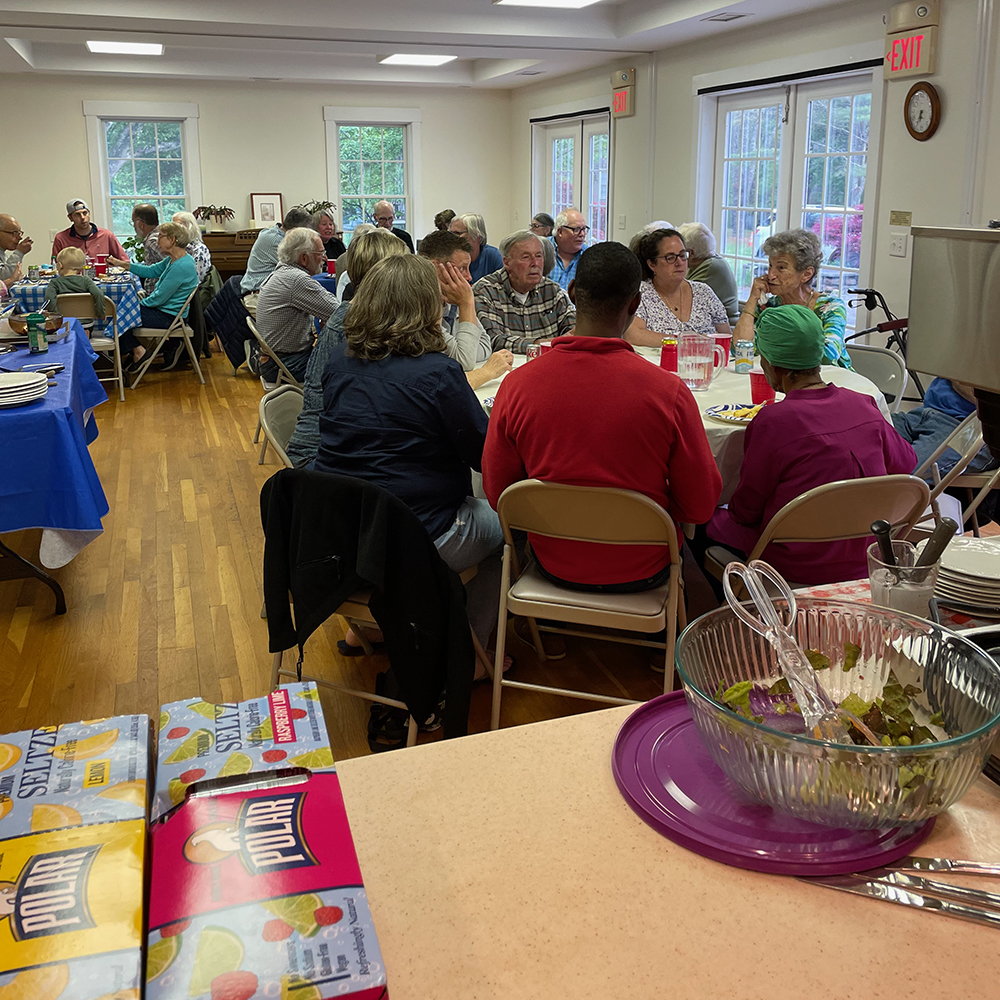
Over 30 friends tonight.  Glad to have some return from the winter away.

Days are getting longer.  While the older people talked or played Bananagrams, the young enjoyed a warm spring evening.

There was a project (after tag)..

It had to do with grass and rocks…

And it was peaceful.

{ 0 comments }

Lord, Our Shepherd!

by admin on April 21, 2013

Lord, Our Shepherd!

-042113-

John 10:22-30
22At that time the festival of the Dedication took place in Jerusalem. It was winter,23and Jesus was walking in the temple, in the portico of Solomon.24So the Jews gathered around him and said to him, “How long will you keep us in suspense? If you are the Messiah, tell us plainly.”25Jesus answered, “I have told you, and you do not believe. The works that I do in my Father’s name testify to me;26but you do not believe, because you do not belong to my sheep.27My sheep hear my voice. I know them, and they follow me.28I give them eternal life, and they will never perish. No one will snatch them out of my hand.29What my Father has given me is greater than all else, and no one can snatch it out of the Father’s hand.30The Father and I are one.”

An elderly lady was asleep in her bed one night, when she was awakened by a strange noise from the living room. Cautiously, she walked in and discovered a burglar in the process of stealing the stereo. Overcome with fear, she whispered a desparate prayer, “Help me Jesus!” The burglar heard her and started toward her. Without a thought she put up her hand and shouted a favorite scripture reference: ACTS, 2:38! The burglar immediately froze. The lady dialed 911, and within minutes, police were on the scene, and took the burglar to the police station. As the police were questioning him, one of the detectives said, “I’m curious, you could have ran and got away, why did you stay frozen in that one spot?” The burglar answered, “Man, if you knew that old lady was packing an axe and two 38 revolvers, you would not have moved either!” You got that? The burglar though she said an axe and two 38 revolvers.

In the passage we read today, we are confronted with the divine character of Christ and encouraged to respond in faith. Jesus is one, along with God, who gathers, protects and eternally blesses God’s people.
The feast of Dedication that John is talking about in our Scripture was celebrating the victory of the true religion over the corruption of Antiochus. Antiochus had suppressed the worship of Jehovah and replaced it with the worship of Zeus. The victory of Judas Maccabaeus in 164 BC restored the worship of the true God in a cleansed and refurbished temple. We call it Hanukkah, the festival of light. Jesus was among the crowds walking in the temple courts that day.

The people gathered around him and asked, “How long will you irritate us? Are you the Messiah? Tell us plainly, in words we can understand.” Jesus answered the question. “I have told you… The works that I do in my Father’s name testify to me, but you do not believe.” Jesus had told them when he healed the blind man. He had told them as he fed the five thousand. He had told them he was the light of the world. But they had not understood.
During his teachings and works, Jesus testified to who he was. For those who have eyes to see, those who are seekers, both Jesus’ teachings and his works clearly declared who he was. However, the religious authorities refused to see who stood before them. Each time he told them, they plotted to destroy him. They were not even curious if Jesus is the messiah or not. They wanted a clear claim which they could use in evidence against him.
There is a reason why Jesus’ opponents do not listen, understand, believe or follow. It is because they do not belong to Jesus’ sheep. Jesus is using this metaphor of the shepherd and the sheep. Jesus is the shepherd and we, who are his sheep, hear his voice and follow him.

However, as for the opponents, they had long decided not to believe and not belong to Jesus’ sheep. To those opponents, Jesus again clearly makes the point that those who are his sheep are eternally blessed with the gift of eternal life, a spiritual life that is full, abundant and everlasting. In Christ we are secure and this security is guaranteed because both God and the Son are one when it comes to the gathering, protecting and blessing of the sheep.
In this text, we can hear Jesus’ strong word, “No one will snatch my sheep out of my hand,” “No one can snatch them out of God’s hand.” “God and I are one.” These words assure us that we belong to Christ and make us confident that we live in God’s house.”

We are the sheep of the shepherd, Jesus Christ. We hear and follow his voice so we can be secure. However, today we cannot help but question what happened last Monday.
Last Monday, what happened in Boston was a sorrowful tragedy. The police said three people were killed and one of them was an eight year old boy. Hospitals kept reporting how many injured critically. Also, I heard this news that 16 years old girl who is a summer member of Chilmark Community Center lost her lag. I couldn’t believe this was happening. Everyone couldn’t believe this news.  It was a very sorrowful tragedy and the whole country grieves for those injured and killed.

Why did it happen? Did it only happen to the people who do not belong to God because they are not secure? I don’t think so. I am sure that all of the victims are beloved ones by God. I am sure that Christ is crying for them now.
We often hear this kind of news from around the world. Why does it happen over and over again? To be honest, we can’t find any clear answer to the question, but at least we know what we should do in this circumstance. Let us look at Psalms 23.  I will read it for you.

“The Lord is my shepherd, I shall not want. He makes me lie down in green pastures; he leads me beside still waters; he restores my soul. He leads me in right paths for his name’s sake. Even though I walk through the darkest valley, I fear no evil; for you are with me; your rod and your staff— they comfort me. You prepare a table before me in the presence of my enemies; you anoint my head with oil; my cup overflows. Surely goodness and mercy shall follow me all the days of my life, and I shall dwell in the house of the Lord my whole life long.”

This is one of the most beautiful psalms. We all learn it as children and over time the pastoral imagery of God as our shepherd becomes almost beautiful. However, even though Psalm 23 is about security, in fact, the background of this pslam is just the reverse. Danger is looming large for the psalmist. Verse 4 provides the setting, and it includes images of death and evil. We can know that this happens precisely at the point of greatest danger.
However, the scene changes abruptly from greatest danger to a banquet in the very presence of God. Here the metaphor for God shifts from shepherd in a threatening situation to host within the security of a home.

What is important is that trust in the Lord’s protection and provision is thus not only something that the psalmist can speak about, but they are part of his personal experience. They emanate from an intimate, personal relationship with the Lord. The surpassing peace and trust stand against the threats behind the scenes of the shepherd’s care. There is a trust that allows the psalmist not to fear. The psalm ends with a statement of deep, life-long faith. No matter what circumstance the psalmist had, he heard the voice of the Shepherd.

Likewise, no matter what circumstance we have, Jesus speaks to us in the shepherd’s voice today. It is a voice of promise God made with us, the promise found in Revelation 7.
The promise is and I quote, “They will hunger no more, and thirst no more; the sun will not strike them, nor any scorching heat; for the Lamb at the center of the throne will be their shepherd, and he will guide them to springs of the water of life, and God will wipe away every tear from their eyes.”

It is a voice that promises stubborn protection and care. It is the voice the sheep hear and know and follow. It is the voice which is especially precious in times of struggle and pain. And it is one we sometimes have to work harder to hear in good times when other voices especially seem to drown it out.  And yet even when those other voices overwhelm and even when we don’t pause to listen, the voice of Jesus is always there, inviting and comforting and urging us on in every threatening situation of our lives.

Let me wrap up today’s sermon with the following questions, which we need to think about as the sheep belonging to Christ. What does our Shepherd’s voice sound like to you?  What promises does it speak? What does the voice tell us to do in threatening physical or spiritual situations? What does the voice comfort us when we hear a tragedy? Let us together go out into the world and try to find the answers to these questions. I pray that the Holy Spirit guides, protects, and blesses all of us and our families, so that you all can hear and follow a comfort and wise Shepherd’s voice.

Let us pray.
Dear Lord, you sent Jesus Christ to be our shepherd. Help us to hear the voice of the shepherd. Give us wisdom and courage to follow the shepherd. We believe that we are your sheep. In Jesus’ name, we pray. Amen.

{ 0 comments }

15When they had finished
breakfast, Jesus said to Simon Peter, “Simon son of John, do you love me more
than these?” He said to him, “Yes, Lord; you know that I love you.” Jesus said
to him, “Feed my lambs.”16A second time he said to him, “Simon son of
John, do you love me?” He said to him, “Yes, Lord; you know that I love you.”
Jesus said to him, “Tend my sheep.”17He said to him the
third time, “Simon son of John, do you love me?” Peter felt hurt because he
said to him the third time, “Do you love me?” And he said to him, “Lord, you
know everything; you know that I love you.” Jesus said to him, “Feed my sheep.
About 15 years ago, Dr. Win Arn did a survey of 1,000 congregations. He asked both
the members and the pastors of these churches what they thought the purpose of
their church really was. Dr. Arn reports that 89 percent of the lay people said
that the purpose of their church was to take care of the needs of the members.
The remaining eleven percent believed that the purpose of the church was to
reach the world with the gospel. Contrast this with the pastors. Ninety percent
of the pastors said that the purpose of their church was to reach the world for
Christ while the remaining ten percent of pastors in those churches agreed with
the laity that the purpose of the church is to take care of the needs of the
members of the church. There is a difference between pastors and church members
on church ministry. What do you think? Which one is more important? I am sure
that most of you think that both are important for our church mission. I think
so as well.


In today’s text, we find a very important message from the conversation between Jesus
and Peter. We will look at this text and figure out what kind of a Christian
and a faith community Jesus wants us to be.


Jesus showed himself again to the disciples by the sea of
Tiberias. Jesus’ disciples were fishing but caught nothing. Just after
daybreak, Jesus stood on the shore and called out to them, “Friends, haven’t
you any fish?” “No!” they answered. Jesus said, “Through your net on the right
side of the boat and you will find some.” When they did, they were unable to
haul the net in because of the large number of fish. Then, they had a meal with
Jesus.


When they had finished eating, Jesus said to Peter. “Do you love me?” Peter replies
Yes, Lord you know I love you. Jesus said to him, “Feed my lambs.” Jesus asked
the same question and Peter answered the same. Then, Jesus said, “Tend my
sheep.” Finally, Jesus again asked the same question. This time, Peter felt
hurt but answered the same. Then, Jesus said, “Feed my sheep.”


In order for us to more deeply understand this conversation between Jesus and
Peter, we need to see the use of the words in the original Greek text. A
problem with most English translations is that they don’t distinguish between
the two different words for “love” that are in the original Greek. In
the Greek version, we can more easily understand the conversation. The first
two times Jesus asked Peter, “Do you love me?” What Jesus uses in
these first two questions is agape love. This is the love of John 3:16, “For
God so loved the world that he gave God’s one and only Son, that whoever
believes in him shall not perish but have eternal life.” This love is
unreserved, unconditional, unwavering and totally oriented for the good of the
other.


However, when Peter responds to Jesus, “Yes Lord, you know I love you,” he
uses a different word in Greek “philios” which means “friendship.” So
the first two encounters might be better translated as follows, “Peter,
are you fully devoted to me?” or “Do you unconditionally love me?”
“Yes Lord, you know I am your friend.” “And I love you as a good
friend.”

What we see in this conversation is that Jesus twice offers Peter the opportunity to
confess his love toward Jesus. Imagine the conversation in connection with the
following two scenes. The first scene is the last supper. Peter said to Jesus
“I will never deny you.” The second scene is Peter’s denial three times before
Jesus died on the cross. Even he began to call down curses on himself and he
swore and he said “I don’t know the man!”
Peter is human, and we can understand what he did to Jesus. In fact, Jesus also knew
that Peter would deny him. Peter might think and determine that he will never
deny Jesus. However, he couldn’t keep the promise that he made with Jesus. Even
though Jesus offered Peter agape love, he couldn’t even keep friendship with
Jesus. I believe that Jesus understood it. So, when Jesus asks Peter for the
third time, “Do you love me?” Jesus uses “philios” instead
of agape. That is, he accepts Peter’s offer of friendship. So, it might be
translated like this, “Peter, are you my friend?” “Lord, you know every thing,
you know I am your friend.”


The love that Peter can actually offer is not agape love. It is friendship and it
is sometimes conditional and wavering.  However,
here is the most important message. Jesus accepts that it is enough. Jesus
accepts us as we are; there is no need to pretend that we are perfect. Jesus
offers us agape love and we offer him friendship which might be conditional.
Nevertheless, Jesus accepts us as he did Peter. I can see and feel the grace of
God in this story.


Following the way of Christ is the key practices of our faith. However, in our church
life, many people find themselves under great pressure to offer agape love back
to Christ. This pressure makes many people exhausted in the course of their Christian
lives. However, we don’t need to be exhausted. Today’s story tells us that
Jesus accepts our offer of friendship instead of agape love.


So, here is what we as a church should remember. The key practice to take care of
oneself in the church is to build a friendly relationship with Jesus Christ.
This is what today’s church needs. This relationship with Christ will play a
major role in both our personal spiritual growth and church growth. This
relationship with Christ will play an important role in meeting our needs in
our Christian lives.


Last Sunday, we started a Spring Bible Study group. Many of you participated with interest
for the growth of your spiritual life. I hope that we can have meaningful time
to build a friendly relationship with Christ and even Paul through his life and
theology, which are filled with God’s grace, Jesus love, and the Spirit’s
power. I pray this study group will influence your life and mine too.


Also, I want to emphasize again what Jesus said to Peter three times, “Feed my
lambs.” “Tend my sheep.” “Feed my sheep.” There is no doubt that in this
conversation, Jesus commends Peter to take care of not only the church but also
the neighbors. Reaching out is a very important practice that we should emulate.
Let me share with you my experience that I had a few days ago.


Last Tuesday, I went to the hospital. It was my first time to visit the hospital as a
chaplain alone. I hesitated a little and worried if they might not want me to
visit. So, I stopped in the lobby on the second floor and prayed to God. With a
little courage and big smile, I started visiting patients. In one room, a man was
sitting on a chair and saw and welcomed me. I introduced myself and he asked,
“What is your mission?” So, I told him that my mission is to visit patients to
talk to them, listen to them, and pray for them. Then, he told me his mission.
It was “to stay alive.” He was 91 years old and was waiting for the end of his
life, but he was too emotional and trembled with fear. I grabbed his hand and
prayed for him. While praying for him, he cried and even cried loudly. I couldn’t
stop myself from getting emotional and crying also. I couldn’t stop praying for
him. I prayed and prayed. After the prayer, he didn’t stop crying and said to
me, “It is the most blessed day in my life ever.” “Thank God, thank God!” And
he said to me, “Bless you, bless you, bless you.” It was my first visit as a
chaplain and I realized that many are waiting for God’s comfort, grace, mercy,
and love. I was ashamed of myself because I hesitated to visit them. This visit
clearly reminded me of why I am in the hospital and what I am doing in this
hospital. I prayed for him and shared God’s love with him and he kept saying
“thank God and “bless you!” That day for me was full of blessing.


Dear friends, we have the responsibility to take care of not only ourselves, our
body and our soul but also our church and our neighbors. We are Jesus’
disciples and in order to support us, he sent the Holy Spirit. The Spirit is
with us and strengthens us and fills us with wisdom and courage, so we can become
a faithful community.


We are still living in Easter season. For this season, I pray that we all can
engage in the process to build a friendly relationship with Jesus Christ. And I
pray that we are making one more step for us to be faithful Christians. For
this process, we need to support each other with prayers and concerns. And I
pray that we are making one more step for us to be a faith community to reach
the world with the gospels for the people who need God’s comfort, grace, mercy,
and love. Let’s depend on the Holy Spirit for this and the Spirit will support
all of us.


Let us pray.

Lord, we call you our friend, but most of the time we are incapable of understanding
what that means. We believe that you want intimate relationship with us. Help
us to build the relationship with you and continue to be with us. Continue
calling us to a faithful relationship with you and the world you created. Amen.

{ 0 comments }

My Lord, My God!(04/07/2013 Sermon)

by admin on April 10, 2013

19When it was evening on that day, the first day of the week, and the doors of the house where the
disciples had met were locked for fear of the Jews, Jesus came and stood among
them and said, “Peace be with you.”20After he said this, he
showed them his hands and his side. Then the disciples rejoiced when they saw
the Lord.21Jesus said to them again, “Peace be with you.
As the Father has sent me, so I send you.”22When he had said this,
he breathed on them and said to them, “Receive the Holy Spirit.

23If you forgive the sins of any, they are forgiven them; if you
retain the sins of any, they are retained.”24But Thomas (who was
called the Twin), one of the twelve, was not with them when Jesus came.

25So the other disciples told him, “We have seen the Lord.” But he
said to them, “Unless I see the mark of the nails in his hands, and put my
finger in the mark of the nails and my hand in his side, I will not believe.”

26A week later his disciples were again in the house, and Thomas was with them.

Although the doors were shut, Jesus came and stood among them and said,

“Peace be with you.”27Then he said to Thomas, “Put your finger here and see my hands.
Reach out your hand and put it in my side. Do not doubt but believe.”

28Thomas answered him, “My Lord and my God!”29Jesus said to him,

“Have you believed because you have seen me?
Blessed are those who have not seen and yet have come to believe.”

30Now Jesus did many other signs in the presence of his disciples,
which are not written in this book.31But these are written
so that you may come to believe that Jesus is the Messiah, the Son of God, and
that through believing you may have life in his name.


I will start this sermon with a funny story.

An atheist was taking a walk through the forest.
‘What majestic trees! What powerful rivers! What beautiful animals!’, he said
to himself. As he continued walking alongside the river he heard a rustling in
the bushes. Turning to look, he saw a 7 foot grizzly bear charging towards him.

He ran as fast as he could up the path. Looking over
his shoulder he saw that the bear was closing in on him. His heart was pumping
frantically and he tried to run even faster. He tripped and fell on the ground.
He rolled over to pick himself up but saw the bear raising his paw to take a
swipe at him. At that instant the atheist cried out: ‘Oh my God!…’

All of a sudden, time stopped. The bear froze. The forest was silent.

It was then that a bright light shone upon the man
and a voice came out of the sky saying: ‘You deny my existence for all of these
years, teach others I don’t exist and even credit creation to a cosmic
accident.  Do you expect me to help you
out of this predicament? Am I to count you as a believer?’

The atheist looked directly into the light and said,
‘It would be hypocritical of me to suddenly ask you to treat me as a Christian
now, but perhaps, could you make the BEAR a Christian?’

Very well, ‘said the voice. The light went out, and
the sounds of the forest resumed. And then the bear lowered his paw, bowed his
head and spoke: ‘Lord, bless this food which I am about to receive and for
which I am truly thankful, Amen.’


Last Sunday, we witnessed that Jesus conquered our
greatest enemies, sin and death. For the last week, have you lived with the
resurrection faith in Christ? I hope so.

As our Easter celebrations continue, we hear of
further encounters with the risen Christ. Let us see the text. We find Jesus’
disciples in the dark. They are the people who heard the news from Peter that
the tomb was empty. They are the friends and followers of Jesus to whom Mary
brought the message that she had met the risen Christ. But what are they doing
this night?

Obviously, they do not seem to be celebrating. They
have locked the door for fear that the same thing that happened to Jesus will
happen to them. I can imagine them sweating profusely and can even see some
occasionally checking the doorknob to make sure that it was locked. Other
disciples might have been looking out of a peephole or a window. The disciples
fear the Roman and religious authorities that murdered Jesus would possibly
murder them for being associated with this radical, itinerant preacher from
Galilee. There messianic hopes have dissolved into mere survival, coupled by
utter confusion and calamity. They had a lot to be afraid of. They could be
accused of stealing Jesus’ body. They could be punished for guilt by
association with his movement. It is dark out there. They locked themselves in.

All of a sudden, into that locked room Jesus appears.
John seems to tell us that everything has changed. Into that moment of fear and
surprise, Jesus comes with a message of comfort, “Peace be with you.” He offers
that message to them twice. First, when they see this figure suddenly appear
before them. Then, he repeats this message once again after they realize that
they have finally met the risen Christ. But it is important for us to notice
that they neither recognize him nor rejoice until Jesus shows them his hands
and his side. We should not chastise Thomas for later asking for the same
manifestation.

In fact, Jesus had assured them earlier that he
would bring them comfort and joy (John 17:12-13). He would give them an
advocate, “the Spirit of truth who comes from the Father (John 15:26).” However,
they didn’t feel comfort and joy until they met Jesus. Now, when they met Jesus
in person, they are all touched with the Holy Spirit. The disciples were filled
with the Holy Spirit so that they would become messengers of the good news of
what God had done in the life, death, and resurrection of Jesus. Strengthened
by the Holy Spirit they were to open the locked doors of fear.

They told Thomas what they have seen. However, he
demanded what they had experienced. He wanted to see the wounded hands and the
pierced side of Jesus.

A week later the disciples, once again, had gathered
together. Thomas is now with them.  Although the doors were shut, Jesus
came and stood among them and said, “Peace be with you.” Then, Jesus offers his
hands and side to Thomas and he asks Thomas not to be unbelieving. It is then
that Thomas declares “My Lord and my God.” And Jesus said to Thomas, “Have you
believed because you have seen me? Blessed are those who have not seen and yet
have come to believe.”

This is the story I wanted to share with you today.
Based on this story, I brought some questions to take into consideration. What
does it mean to live with the resurrection faith? Does it mean that we should
live without doubts? Traditionally, Thomas has been recognized as “Doubting Thomas.”
When I was a kid, I wondered why Jesus chose Thomas as his disciple. I thought
that he was not faithful. What do you think? In fact, in this story, the
spotlight is on Thomas but we should not miss that he is not alone in his doubt
in this story. Even thought Jesus had assured them that he will be resurrected
in three days, no one said to Jesus when he came into the house, “Welcome back”
or “We knew it.” “What took you so long? ”No one anticipates Jesus will return.
Even when he shows up, everyone doubts. Everyone.  This story tells us a key understanding about
our spiritual journey. I don’t think that Jesus is rebuking Thomas when he
says, “Have you believed because you have seen me? Jesus definitely knew that
Thomas and the other disciples will have doubts. Likewise, we are people who
have knowledge and reason and who doubt. However, we should not think that
doubt is exactly not the opposite of faith but actually is part of it. I believe
that in this story, Jesus is blessing all those who have managed to believe
without the benefit of direct experience and all those who have managed to come
to faith by living with doubts and yet still trying to find a way to believe.

We don’t need to figure everything out. If we have
to figure it all out ahead of time, then we will never get started. Even though
we are Christians with a resurrection faith, we realize that belief and doubts
go hand in hand. In this fragile way, we act, we reach out, we feed, we care,
we tend, we struggle, we work, we love, all without any guarantees. We struggle
to find a way to believe in the promise from the Lord who continues to bless
those who believe amid their doubts and keep faith amid their uncertainties.

I believe that this is exactly what the spiritual
journey is. After Jesus’ resurrection, we start our spiritual journey with the
resurrection faith in Christ. This journey is not straight. It is sometimes
curved and we become very often distracted. Therefore, in order for us to get
through the spiritual journey, Jesus sent us the Holy Spirit whom we can ask
wisdom and courage, so that we can manage to come to faith amid our doubts and
uncertainties.

Let me wrap up this sermon. We celebrate Jesus’
resurrection for seven weeks and today is second Sunday. During these weeks,
let us together struggle to find a way to believe and to deal with our doubts
and uncertainties. No one can solve our doubts and uncertainties but the Holy
Spirit can help us manage them. Then, finally, we will be able to declare, like
Thomas, “My Lord and my God.”


Let us pray,

Dear God, we give thanks to you for this graceful
time. Help us to experience the works of the Holy Spirit amid our lives. Bless
us to keep your wisdom and courage and faith amid our uncertainties. And bless
us to stand before you as real Christians. We pray in the name of Jesus Christ.
Amen.

{ 0 comments }

Pizza Nights Tuesdays

by admin on April 9, 2013

All ages enjoy Pizza nights, Tuesday at 6 p.m.  Bananagrams and running around afterwards, depending on your physical or  mental abilities.  All are welcome!

Pot luck deserts also.

After supper tag...

Serious Bananagrams

{ 0 comments }

Christ is Alive (03/31/13 Sermon)

by admin on April 1, 2013

1 Corinthians 15:19-26

19If for this life only we have hoped in Christ, we are of all people most to be pitied.

20But in fact Christ has been raised from the dead, the first fruits of those who have died.21For since death came through a human being, the resurrection of
the dead has also come through a human being;22for as all die in Adam, so all will be made alive in Christ.23But each in his own order: Christ the first fruits, then at his
coming those who belong to Christ.24Then comes the end,
when he hands over the kingdom to God the Father, after he has destroyed every
ruler and every authority and power.25For he must reign
until he has put all his enemies under his feet.26The last enemy to be destroyed is death.


While shaking hands with the pastor after worship,
Mrs. Jones noticed that he had a rather bad cut on his face.

“Why pastor, what happened? How did you cut your
face?,” she asked.

“Well, I was thinking about my sermon this morning
while I was shaving,” the pastor replied. “I guess I wasn’t concentrating and
cut myself in the process.”

“That’s too bad,” Mrs. Jones replied. “Next time you
should concentrate on your shaving and cut your sermon.”

The Lutheran Church has a custom for an Easter sermon to begin with the telling of a joke.

I don’t know the origin of it, but I guess that this tradition might have been made for the people who can’t
laugh and celebrate the resurrection of Christ.


Today is Easter Sunday and this is the day
that we can all laugh and celebrate the resurrection. There are many reasons we
can joyfully laugh and celebrate this day. I will give you one reason among
them and I hope that this can be a fruitful and meaningful message for you.
Our Spiritual journey is full of stories.
Each of us has our own story. We also learn many stories from books, movies,
and relationship with others. Interestingly, in many stories, there are some
enemies, which make the stories more dramatic. Think of the characters such as
Batman vs. Joker, Little Red Riding Hood vs. the woof, Frodo vs. Sauron in The Lord of the Rings, Sherlock Homes
vs. Moriarty, so on and so on. In my case, me and my five year old son. It is a
little different for the above enemies, but my son always asks me to be a
monster who scares him. I don’t know what kind of monsters he wants me to be.
So I just pretend to attach him, and all of a sudden he becomes a hero who
defeats the monster. He throws something to me and they hit me. Sometimes he
kicks me and it hurts.


Likewise, we as Christian also have enemies in our spiritual journey. Paul says in Ephesians 6
that “we wrestle” against the powers of darkness. And “You be strong… You put
on the whole armor of God that you may be able to stand.” In our spiritual
journey, we have many enemies such as pride, self-egoism, lack of faith, and
skepticism.

What are your spiritual enemies? Each of us has various enemies according to our life situation.

No matter how many enemies we have, we all end up with two great enemies. Do you
know what they are? They are sin and death and we are weak before them. We don’t
have the ability to conquer sin and death on our own.
Paul believes that Adam was literally our first parent and that Adam’s sin infected

the whole race and led us to know sin which resulted in both physical and spiritual death.

That is, we all died in Adam. However, Christ our Lord has been raised from the dead
and became the first fruits of those who have died. This means that Christ
conquered sin and death. Paul says “For since death came through a human being,
Adam, the resurrection of the dead has also come through a human being, Jesus
the Christ; for as all die in Adam, so all will be made alive in Christ.”


Today is the day when sin and death, our greatest enemies are conquered by Jesus Christ.

Jesus’ resurrection tells us that death is not the end of everything. Today, those who follow Jesus
have a new message to proclaim. Not only does Jesus’ resurrection proclaim his
victory over death, but also offers forgiveness for all sins, and invites
humanity to live a new life. He became the symbol of hope that we will not be
left for sin and death and that we can have a new life in God’s kingdom. Our life
and our world have been turned upside down by Jesus’ resurrection. Our greatest
and last enemies have been conquered, so we can joyfully laugh and celebrate
this moment.

Jesus’ resurrection from the dead is as essential to the Christian faith as His death upon the
cross. Paul writes in 1Corinthians “For what I received I passed on to you
as of first importance: that Christ died for our sins according to the
Scriptures, that he was buried, that he was raised on the third day according
to the Scriptures” (1 Cor. 15:3-4). Especially, Paul emphasizes the
importance of the resurrection with his statement “And if Christ has not
been raised, our preaching is useless and so is your faith.


Then, here is a question to take into consideration for our lives as Christians and for our
church mission. How can we become a community which lives out our faith in
Christ’s conquer in sin and death? How can we, as a small church in Chilmark,
spread today’s good news to others? How can we effectively build a faithful, fruitful,
and meaningful relationship with God and our neighbors?


To find the answers to those questions, let’s start with a simple step. Celebrate the resurrection
with our whole hearts and keep the faith that Jesus conquered our last enemies,
sin and death. Then, celebrate our unity with God and neighbors through Jesus’
resurrection. Then, we can take the next step to become the second fruits which
follow Christ, the first fruits. Even though we are a small church, our faith
can be powerful enough to influence on the island and even the world.


Here is a very interesting theory. It is called the Hundredth Monkey Effect. Have you heard of
it? The Hundredth Monkey Effect was first introduced by biologist Lyall
Watson in his 1980 book, Lifetide. He reported that Japanese primatologists had stumbled upon a surprising
phenomenon.


The Japanese monkey, Macaca fuscata, had been observed in the wild for
a period of over 30 years. In 1952, on the island of Koshima, scientists were
providing monkeys with sweet potatoes dropped in the sand. The monkeys liked
the taste of the raw sweet potatoes, but they found the dirt unpleasant. An
18-month-old female named Imo found she could solve the problem by washing the
potatoes in a nearby stream. She taught this to her mother. Her playmates also
learned this new way and they taught their mothers too. This cultural
innovation was gradually picked up by various monkeys before the eyes of the
scientists. Between 1952 and 1958 all the monkeys learned to wash the sandy
sweet potatoes to make them more palatable. Then something startling took
place. Almost everyone in the tribe was washing sweet potatoes before eating
them and a most surprising thing observed by these scientists was that the
habit of washing sweet potatoes then jumped over the sea. This cultural
innovation started on an isolated small island, but Colonies of monkeys on
other islands and the mainland troop of monkeys at Takasakiyama began washing
their sweet potatoes. Scientists concluded that when a certain critical number
achieves an awareness, this new awareness may be communicated from mind to
mind.


Do you get the meaning? Let us start living out our resurrection faith.
Our lives will influence the others’ lives on this Island and even over the
sea. Our mission is to spread God’s good news through the resurrection of Jesus
to our neighbors. Our start will be small but it will be great because our
awareness to the resurrection faith will be communicated from mind to mind.
Today, Jesus has been resurrected from the dead. Let us together celebrate and
spread this good news to our neighbors. Jesus our Lord is alive.


Let us pray.

Dear God, we are filled with joy on this day of resurrection. In our
lives filled with sin and death, you have given us a new message that Jesus
conquered sin and death. Now, give us strength to live in light of our faith in
the resurrection. Give us the joy of living with the faith in Christ and the
courage to bring good news to the world around us. In your name, we pray. Amen.

{ 1 comment }

Easter 2013

by admin on March 31, 2013

After an Easter Vigil Saturday night, with wonderful music by the Chilmark Church band ( Eunji on cello, Emily on violin, Carol on recorder and Seongmoon on guitar, Irene on violin and Bette on harmonica were away or sat out this performance), we celebrated Easter with special music by Sandy Bittermann Atwood.

Sandra Bittermann Atwood


Emily Broderick gave a rousing Children’s sermon complete with an empty box gift wrapped and shocking empty eggs that the kids waited to open together.  Their surprise was quickly moderated by some eggs with candy in them.  But they really “got” the empty tomb.

Below:  Easter Egg hunt after church.

The chief gave the little kids a head start.

Big kids off and running.

baskets full


The Empty tomb is followed by full baskets.  A good morning!

{ 1 comment }

Cross Repair begun!

by admin on March 31, 2013

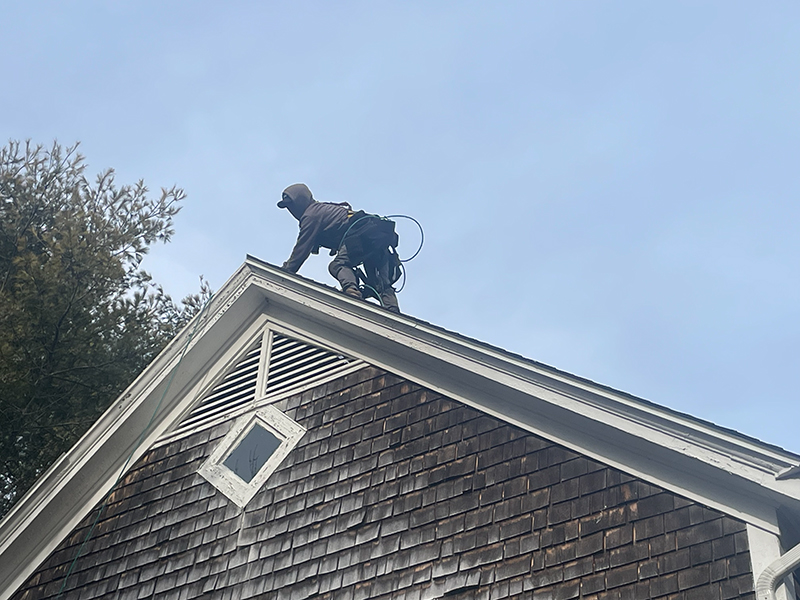
The Saturday before Easter, a bright blue afternoon for taking down the dangling cross.

THE STEEPLE CROSS AFTER HURRICANE SANDY

Roy Riley and Mark Clements arrived with Mark’s truck.

Mark had to tell Roy how to operate the boom.

Roy starts the ride up.

Slowly, adjusting so he won’t knock the steeple….

He reaches the top.. The cross is loose enough to pull off.

The ride down begins.  He can see water in every direction.  Can he remember which knob controls which part of the boom?

With Roy down safely, Mark puts the truck to bed.

Mark Clements on his truck. THANK YOU, MARK!

Look for the next installment:  Repairing the Old Copper Cross.

{ 1 comment }

What We Value Most…(03/17/13 Sermon)

by admin on March 24, 2013

Philippians 3:4b-14


4  If anyone else has reason to be confident in
the flesh, I have more:  5 circumcised on
the eighth day, a member of the people of Israel, of the tribe of Benjamin, a
Hebrew born of Hebrews; as to the law, a Pharisee;  6  as
to zeal, a persecutor of the church; as to righteousness under the law,
blameless.  7  Yet whatever gains I had, these I have come
to regard as loss because of Christ.  8
More than that, I regard everything as loss because of the surpassing value of
knowing Christ Jesus my Lord. For his sake I have suffered the loss of all
things, and I regard them as rubbish, in order that I may gain Christ  9 and be found in him,

not having a righteousness of my own that comes from the law, but one that comes through
faith in Christ,  the righteousness from God based on faith.

10  I want to know Christ  and the power of his resurrection and the
sharing of his sufferings by becoming like him in his death,  11  if
somehow I may attain the resurrection from the dead.  12  Not
that I have already obtained this or have already reached the goal;

but I press on to make it my own, because
Christ Jesus has made me his own.
13  Beloved,  I do not consider that I have made it my
own;  but this one thing I do: forgetting
what lies behind and straining forward to what lies ahead,

14  I press on toward the goal for the prize of the heavenly  call of God in Christ Jesus.
There was a Scotsman whose wife became ill. At first
it did not seem like anything serious. However, as time went on, she became
worse with each passing day. When she got really sick, she asked her husband if
she could have some help. Could they get word to the doctor or could he go into
town and at least get some medicine for her? Each time she asked her husband,
he would tell her to wait a little longer to see if perhaps she would get
better on her own. At the root of the problem was the fact that he just did not
want to give up any of his precious money. His money was of more value to him
than even his wife’s health and well-being.


Finally, after many days of her being sick, even the
husband began to worry about her condition. He decided that it was time for him
to make a trip into town and purchase the medicine that might help his wife get
well. As he prepared to leave for town, he said to his wife, “I’ve put a candle
in the window, and I will be walking backwards to the apothecary shop. If you
should feel yourself starting to die, would you mind blowing out the candle?”

What do you value the most in your life? A recent poll reveals that many Americans value
“time” first, with “career,” “success,” and “money” coming in as close seconds.
Do you agree with that? What we value most demonstrate how we spend our time
and resources. What we value most defines ourselves.


So, now I ask you, “What do you value most?” and
“What is your defining story?” Let us take a look at today’s text. In this
text, we can see what Paul did value most in his life.


Paul confessed that he had spent all his time and
resources pursuing and persecuting Christians. This was the sign of devouted
Pharisees. His goal was to be righteous under the Law. He illustrates his life
in today’s text. There are seven advantages he could claim. The first four advantages
are inherited, which was pretty important for success in his time.


First of all, he was circumcised on the eighth
day which means that he was a full member of God’s covenant people. Secondly, he
is a member of the people of Israel, by birth with all the rights and
privileges that adhere. Thirdly, he hails from the tribe of Benjamin. Fourthly,
he is a Hebrew born of Hebrews which means the son of Hebrew parents without
Gentile contamination.

The last three are his achievements.

Fifthly, he is a Pharisee of Pharisees who practices strict observance of the law.

Sixthly, he is a persecutor of the church as to zeal. Seventhly, he is righteous under the law, blameless according to an interpretation
of the law by Pharisees.

These seven features of Paul define who Paul was
before he, as Saul not as Paul, met Jesus. Before his name was changed to Paul,
Saul was never a follower of Jesus. As Saul travels to Damascus, he experiences
the divine presence: a light from heaven flashing around him and a voice
addressing him. Saul and his traveling companions see the light, but Saul sees
more: the risen Lord Jesus. So overwhelming is the sight that Saul falls to the
ground.


Then, a voice asks, Saul, Saul, why do you persecute
me? After this confrontation with Christ, his whole spiritual world will be
turned upside down.


After his conversion, he spent all his time and
resources pursuing Christ. His career success and the seven advantages are
regarded as loss because of the surpassing value of knowing Christ. His change
of course demonstrates what he values most and who he really is.
Paul is confident that the seven features of his
life belong to the flesh and that his life as a Christian is directed by the
Spirit of God and not the flesh. He contrasts his old mindset and actions with
new ones by using the words such as “gain” and “loss.” That is, he understands
all his external advantages as “loss” and counts knowing Christ as “gain.” In
verse 10, he speaks about giving up all rights and privileges for the sake of
knowing Christ.
Paul values knowing Christ as primary in his life
and wants to be found in Christ. It is largely because he wants to be righteous
before God. He contrasts two kinds of righteousness, “having a righteousness of
my own that comes from the law” versus “one that comes through faith in
Christ.” He chose the latter righteousness for his entire life.
In light of Paul’s life, we need to reflect on what
we value most as individuals and as a church community. Perhaps we could value
certain inherited qualities or achievements as “gains.” Lent is a time to
reflect on our achievements in our lives and re-examine to see if they are
“gains” or “loss.” Also,   Lent is a time
for struggling to know Christ and to belong to Christ. And then, lent is a time
for examining our lives and our faith, so that we can deepen our reliance upon
Jesus Christ.


Paul’s life is a very practical guide for this
Lenten season. Not only does he want to know Christ, but also he wants to be in
Christ. Through this story, we can see that Paul is a person who follows Christ
in word and deed. “Word and Deed!”
I am going to give you an enigmatic question. It was
a sunny day. There were three frogs on a riverside. Suddenly, one of the frogs
stood up and firmly said, “It is too hot. I am going to hop into the water.” The
others just gave a nod.
Now, how many frogs remained at the riverside. This question
is too easy. Right? You can say “two.” But the answer is “three.” Do you know
why? It is because the resolution in mind to hop into the water is totally
different from the practice. That is, the frog had a resolution but failed to
practice. So there are still three frogs on the riverside.


You know NATO which is North Atlantic Treaty Organization.

Many critics express NATO in a different way. No Action Talk Only.

There are many reasons why they criticize NATO like
that. They want action not word. “No Action Talk Only” is not the way for
Christians to engage. The Christian way is “Word and Deed.”


Let us wrap up this sermon. In two weeks, it will be
Easter, when we celebrate Christ’s resurrection from the dead. I though Lent is
a pretty long season but already five weeks have gone by. I ask you, “Have you
been struggling to know Christ and to belong to Christ? Have you been in the
process of examining your faith and life before God?” Only two weeks remain. I
pray that all of us engage in reflecting on our lives and in examining our
values before God. And I pray that all of us humbly try to follow Christ both
in word and deed, so we can joyfully face the resurrected Christ in two weeks.
Paul who values Christ most said, “Forgetting what lies behind and straining forward
to what lies ahead, I press on toward the goal for the prize of the heavenly
call of God in Christ Jesus.”


Let us pray.

Loving God, in Christ you have shown us compassion,
accepted us unconditionally, and given us a new set of values to embrace. Help
us to live in accordance with your will and aspire to be Christ-like in our
relationships. Empower us to be able to follow Christ in word and deed in this
graceful Lenten season so we can joyfully face our Lord. In the name of Jesus
Christ, we pray. Amen.


{ 0 comments }